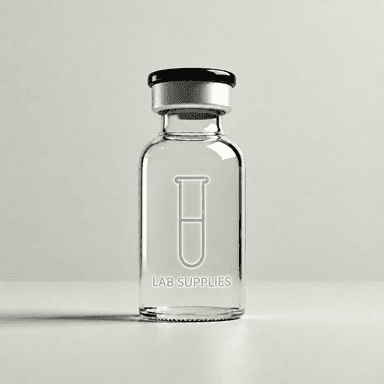
Bacteriostatic Water
Lab SuppliesBacteriostatic water is sterile water containing a small amount of benzyl alcohol as a preservative, used to reconstitute (dissolve) freeze-dried peptides before use in a research setting. It is not itself a bioactive compound.


What this is
Bacteriostatic water is sterile water containing a small amount (typically 0.9%) of benzyl alcohol as a preservative, used to reconstitute (dissolve) freeze-dried/lyophilized peptides before use. It's not a bioactive compound itself, and there's no "benefits" or "dosage" claim to research here the way there is for the peptides it's used to prepare — its role is purely as a diluent.
Practical notes
The benzyl alcohol preservative is what allows a multi-use vial to be safely punctured repeatedly over time (unlike plain sterile water, which has no antimicrobial property once opened) — typically good for repeated use over roughly 28 days once opened, though this should be confirmed against the specific product label rather than assumed universally. Not recommended for use in neonates, per general benzyl-alcohol-preservative safety guidance (not specific to any particular brand of bacteriostatic water) — worth a dedicated verification pass if this becomes a claim on the page rather than a general note.
What is bacteriostatic water used for?+
Reconstituting lyophilized (freeze-dried) peptides into a liquid solution, since most peptides are shipped as a powder.
How is bacteriostatic water different from sterile water?+
It contains a small amount of benzyl alcohol, which inhibits bacterial growth and allows a reconstituted vial to be used over a longer period than plain sterile water.
Who should avoid benzyl alcohol-preserved water?+
It is generally not recommended for neonates, and anyone with a known sensitivity to benzyl alcohol should be aware it is present.
Need something specific, or placing a wholesale order? Message us on Telegram — fastest way to reach us.